PLA 3D Printing: The Low-Cost Pick for Looks-First Parts
PLA prints clean and costs the least. Use it for fit checks, display models, and light-duty parts. It softens near heat, so skip anything hot.
Made in the USAShips in 3 to 5 business daysPrice online in seconds
Mechanical Properties
PLA stands for polylactic acid. It is rigid, prints clean, and shows fine detail well. Published strength figures do not rank cleanly across the materials we print, so see our material properties reference for the real numbers. PLA has the lowest heat tolerance of the five.
PLA is brittle compared to PETG. A part that needs to flex or take a hit should not be PLA. A part that sits on a desk or hangs on a wall is fine.
People call PLA biodegradable. That is not the full story. It breaks down only in a hot compost plant. In a landfill or a home bin, it lasts like any other plastic.
Best Use Cases
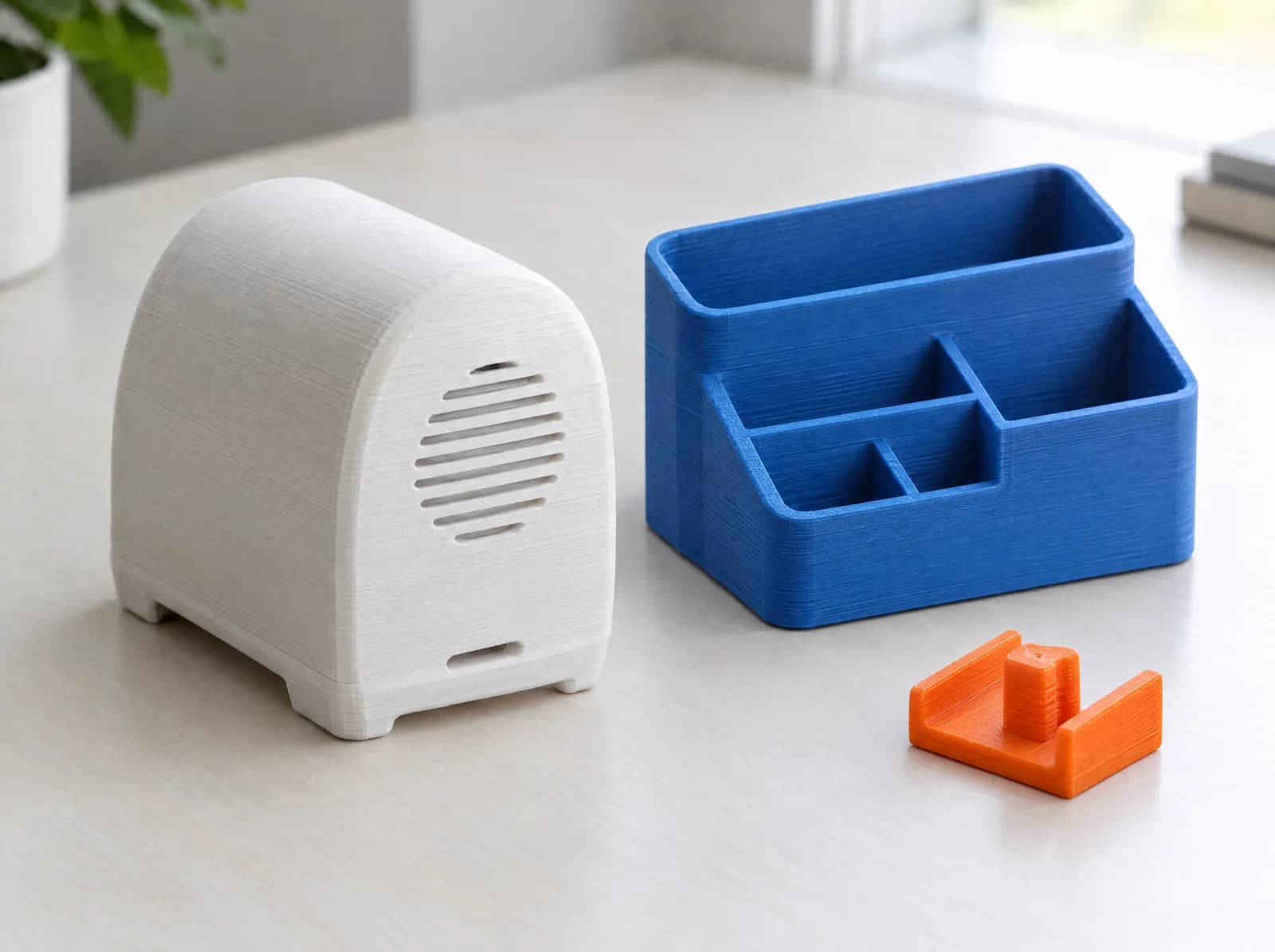
PLA is the right pick for visual prototypes, sales demos, photo props, light-duty fixtures, packaging inserts, and trade show parts. Anything that needs to look right and live indoors.
We print a lot of PLA for hardware startups doing investor demos and for marketing teams who need branded parts on a hard deadline.
PLA vs PETG: When to Move Up
PETG vs PLA is the comparison most buyers ask about. Pick PLA when cost and finish matter more than strength. Pick PETG when the part will see outdoor sun, water, gasoline, or impact.
For production parts that ship to customers, we usually steer buyers to PETG. For prototypes, demos, and short-run indoor parts, PLA is fine.
When to Pick a Different Material
Skip PLA when the part will sit in a hot car, get wet often, or take repeated impact. PLA has the lowest heat tolerance of our five core materials materials we print, so a part in a parked car on a summer day will deform.
Pick PETG for outdoor or impact parts. Pick ABS for heat. Pick PA-CF for strength.
Cost per Unit at 100 and 1,000 Units in PLA
PLA is one of the two cheapest polymers we print. Per-unit cost drops as volume rises. The same STL printed in PLA at one thousand units costs about 81 percent of the per-unit price at one hundred units, from the same tier table checkout uses.
For a real number on your part, upload the file and get your instant quote.
Last reviewed 5 September 2026 by 3D Printer on Demand.
See your price in the next 60 seconds.
Upload your STL. Made in the USA, shipped in days.