3D Printing Materials: Pick the Plastic Your Part Needs
Heat, strength, flex, and cost drive the call. Here is how to read the trade-offs fast, so the part works the first time.
Made in the USAShips in 3 to 5 business daysPrice online in seconds
3D Printer on Demand at a glance
- Materials
- PLA, PETG, PETG-CF and OPM get an instant price online. ABS, PA-CF and TPU go through a person. A person reviews your request and follows up by email.
- Instant-price part size
- About 220 mm on the longest side
- Standard print settings
- Instant orders print at our standard settings: a 0.4 mm nozzle and 25 percent infill. A part that needs more infill or a finer nozzle goes through a person. A finer 0.2 mm nozzle for extra detail is available on a reviewed, in-house job.
- Standard lead time
- Most orders ship in 3 to 5 business days.
Which 3D printing material should you pick?
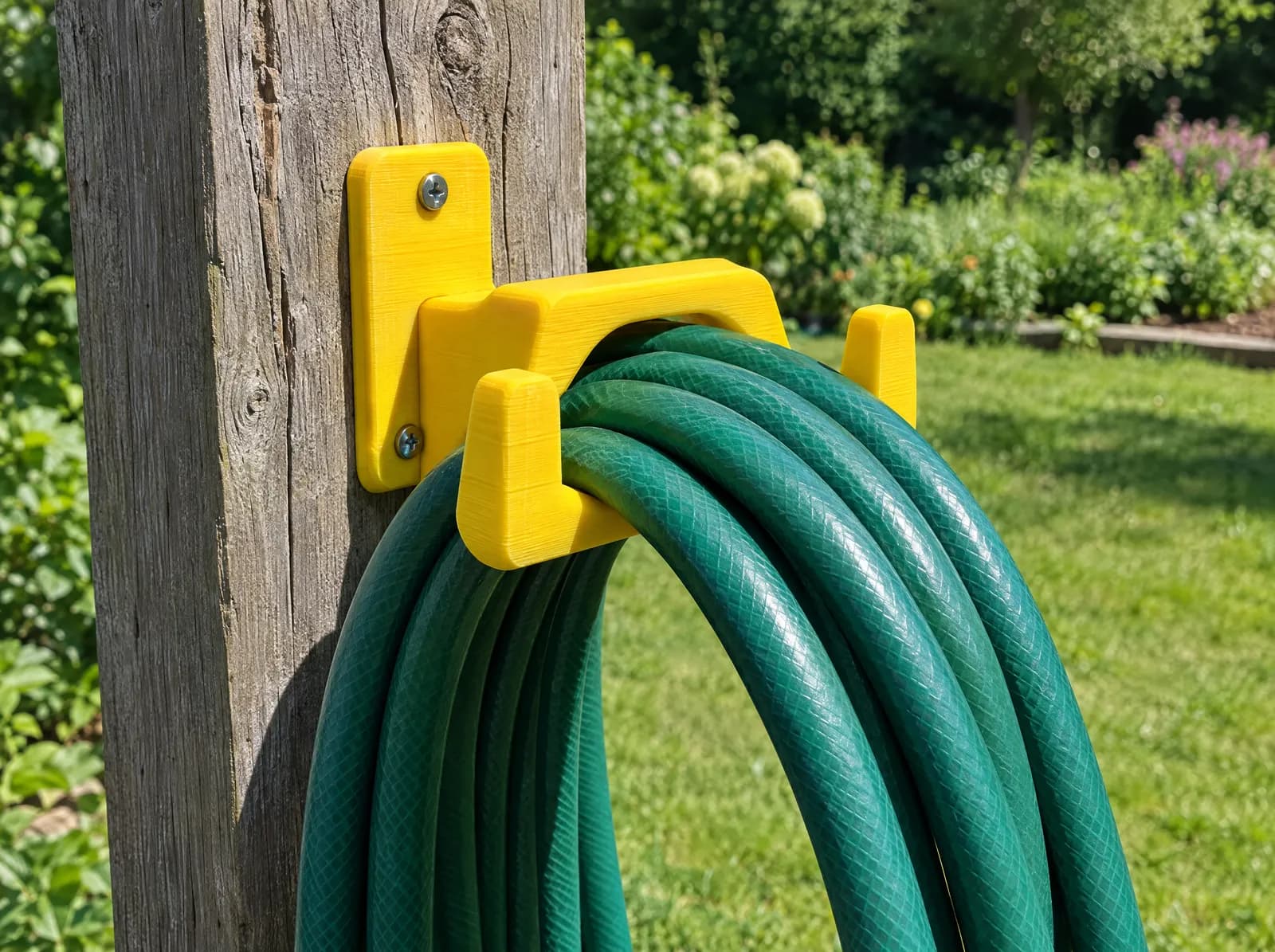
Pick PETG for most working parts. It is tough, it shrugs off water and many chemicals, and it holds up outdoors, so that a part you ship keeps working in the field. PETG is our default for production. If the part is only for show or lives indoors, PLA costs less and prints crisp detail. If the part sees real heat, pick ABS. If it has to carry load or take stress, pick PA-CF. If it has to bend or seal, pick TPU. If it lives outside in the sun, pick OPM, an outdoor-grade plastic made for sun and weather.
The right pick comes down to four questions. How hot does the part get? How hard does it get hit or loaded? Does it live outside? Does it need to flex? Answer those four and the material almost picks itself. Still not sure? Upload your part and we will suggest a fit. Use the instant quote to start.
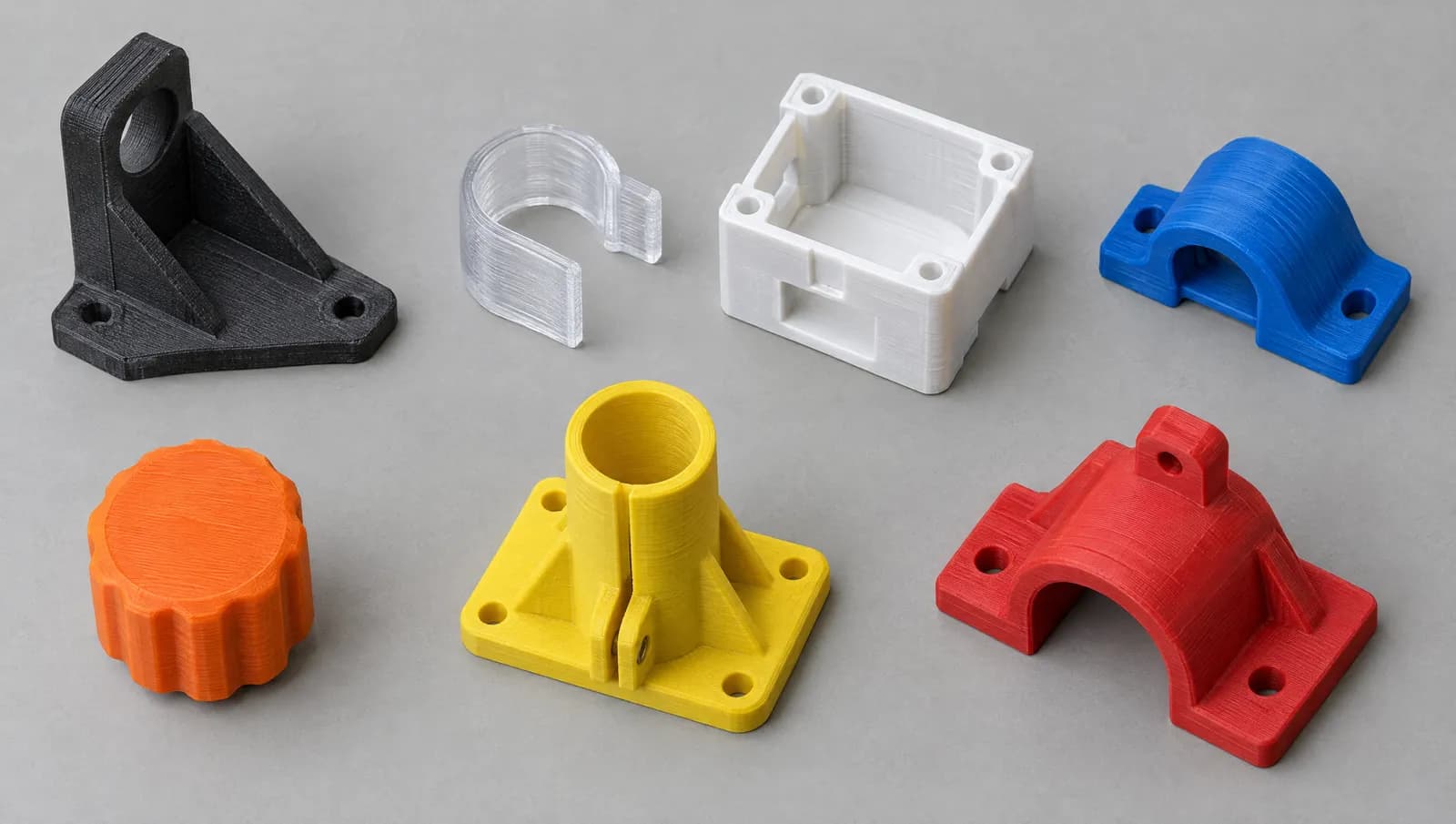
PETG vs PLA vs ABS: what changes in real parts?
In real parts, the big three trade heat, toughness, and finish. PETG bends before it breaks and works outside. PLA is stiff and prints the cleanest detail, but it cracks under a sharp hit and softens in a hot car. ABS takes the most heat and paints well, but big flat ABS parts can warp as they print, so we watch flatness on those.
Here is how they compare on heat. Heat is how well a material keeps its shape as things warm up. This is a ranking across the materials we sell, not a published specification: filament brands differ widely on the same nominal material, so a single number here would describe no real spool. Published strength figures do not rank cleanly across these materials at all, since manufacturers measure different things and products sold under one polymer name disagree. See the published figures for the actual numbers. If a design temperature or a load matters, ask for a review and we will work to the number that matters to you.
- Holds shape to
- Lower
- Outdoor use
- Yes
- Flex
- Rigid
- Best for
- Outdoor parts, enclosures, jigs
- Holds shape to
- Lower
- Outdoor use
- Yes
- Flex
- Stiff
- Best for
- Jigs, fixtures, parts that must hold their shape
- Holds shape to
- Not published
- Outdoor use
- Built for it
- Flex
- Rigid
- Best for
- Outdoor mounts and covers that sit in the sun
- Holds shape to
- Lowest
- Outdoor use
- No
- Flex
- Rigid
- Best for
- Visual prototypes, indoor fixtures
- Holds shape to
- High
- Outdoor use
- Some
- Flex
- Rigid
- Best for
- Heat exposure, painted parts
- Holds shape to
- Highest
- Outdoor use
- Yes
- Flex
- Stiff
- Best for
- Load-bearing brackets, tooling
- Holds shape to
- Varies by product
- Outdoor use
- Yes
- Flex
- Flexible
- Best for
- Gaskets, grips, seals, feet
| Material | Heat, ranked | Outdoor use | Flex | Best for |
|---|---|---|---|---|
| PETG | Lower | Yes | Rigid | Outdoor parts, enclosures, jigs |
| PETG-CF | Lower | Yes | Stiff | Jigs, fixtures, parts that must hold their shape |
| OPM | Not published | Built for it | Rigid | Outdoor mounts and covers that sit in the sun |
| PLA | Lowest | No | Rigid | Visual prototypes, indoor fixtures |
| ABS | High | Some | Rigid | Heat exposure, painted parts |
| PA-CF | Highest | Yes | Stiff | Load-bearing brackets, tooling |
| TPU | Varies by product | Yes | Flexible | Gaskets, grips, seals, feet |
A strength number would only be part of the story anyway. PLA and PETG often test close on paper, but PLA snaps under a sharp hit while PETG bends first. For any part that gets handled, dropped, or loaded, that toughness gap matters more than any single figure. This is why we steer most working parts to PETG even where PLA looks similar on a spec sheet.
Want the design rules that keep any of these printing clean? See the 7 design checks before you upload.
When do you need PA-CF or TPU?
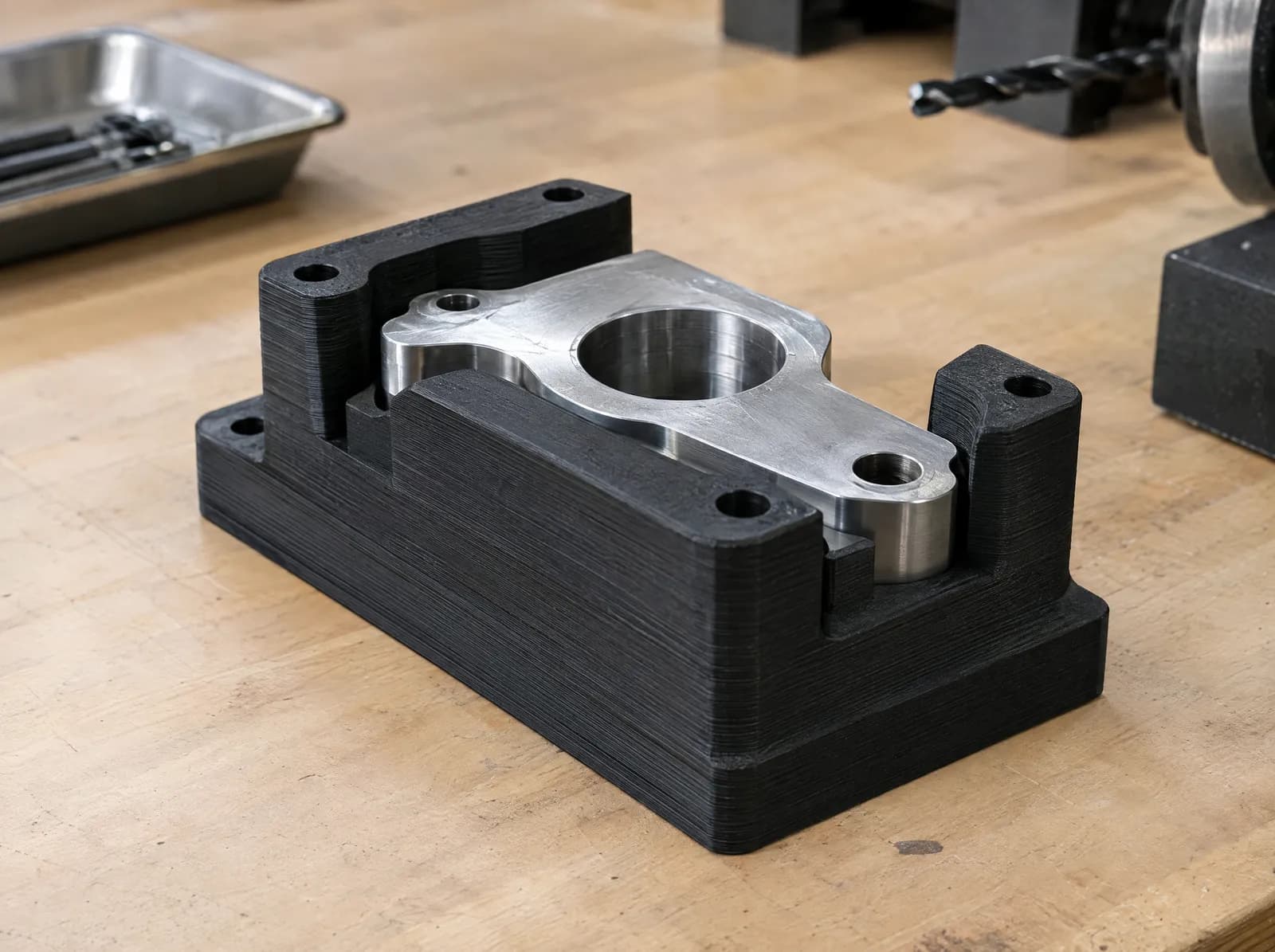
You need PA-CF when the part carries load, holds tight tolerance, or sits near heat that would soften PETG. PA-CF is carbon fiber nylon, our usual pick for load bearing parts, and it holds its shape at the highest heat of our five core materials. Pick it for structural brackets, end-of-arm tooling, and jigs that take stress, so that the part keeps its shape under real working load.
You need TPU when the part has to bend and spring back. TPU makes gaskets, gripper pads, bumpers, and seals. A rigid material would crack where TPU just flexes and returns to shape.
Both PA-CF and TPU get a fast human quote, not an instant online price. A person checks the file. A person reviews your request and follows up by email.See the PA-CF page and the TPU page for full specs and design tips.
How much do 3D printing materials cost?
Material is only one part of the price, but it does move the number. PLA and PETG cost the least per part. ABS sits in the middle. TPU costs more because it prints slowly. PA-CF costs the most, because the filament is pricey and the printer runs slower to lay it down clean.
PLA and PETG get an instant price the second you upload. ABS, PA-CF, and TPU route to a fast human quote. Either way, the price per part drops as your order grows, and every part ships in 3 to 5 business days. Upload your STL to see real numbers for your part, or check FDM printing for how we run the job.
Common questions
- What is the strongest 3D printing material?
- Published strength figures do not rank cleanly across these materials, because manufacturers measure different things and two products sold under one polymer name can disagree. PA-CF, our carbon fiber nylon, holds its shape at the highest heat of our five core materials and is our pick for load-bearing brackets and end-of-arm tooling. PETG is the usual default of the instant-price materials. See the published figures on our material properties reference, or ask for a review if a load actually matters.
- Which 3D printing material is cheapest?
- PLA and PETG cost the least per part, and both get an instant price online. PLA is best for visual and indoor parts. PETG is the better pick for parts that must work, since it handles water, sun, and impact.
- What is the best all-around 3D printing material?
- PETG is the best all-around pick for working parts. It is tough, it resists water and many chemicals, and it holds up outdoors. It is our default for production, and it gets an instant price the second you upload.
- Which material should you pick for outdoor parts?
- Pick PETG for outdoor parts. It shrugs off water, sun, and many chemicals, and it holds its shape in normal outdoor heat. Skip PLA outdoors, since sun and heat make it soften and go brittle over time.
Last reviewed 5 September 2026 by 3D Printer on Demand.
See your price in the next 60 seconds.
Upload your STL. Made in the USA, shipped in days.