PETG 3D Printing: The Default for Parts That Work Outside
PETG is our default for most production work. It is tough, it prints clean, and it holds up in sun, rain, and shop chemicals.
Made in the USAShips in 3 to 5 business daysPrice online in seconds
Mechanical Properties
PETG stands for polyethylene terephthalate glycol. It is tougher than PLA, takes UV better than ABS, and resists most household chemicals. For heat it beats PLA, and ABS and PA-CF beat it. Published strength figures do not rank cleanly between these materials, so see the published material figures for what each manufacturer actually reports.
Layer adhesion on PETG is very strong. Parts hold up well to twist, bend, and impact loads. This is why PETG is our default for production work.
Best Use Cases
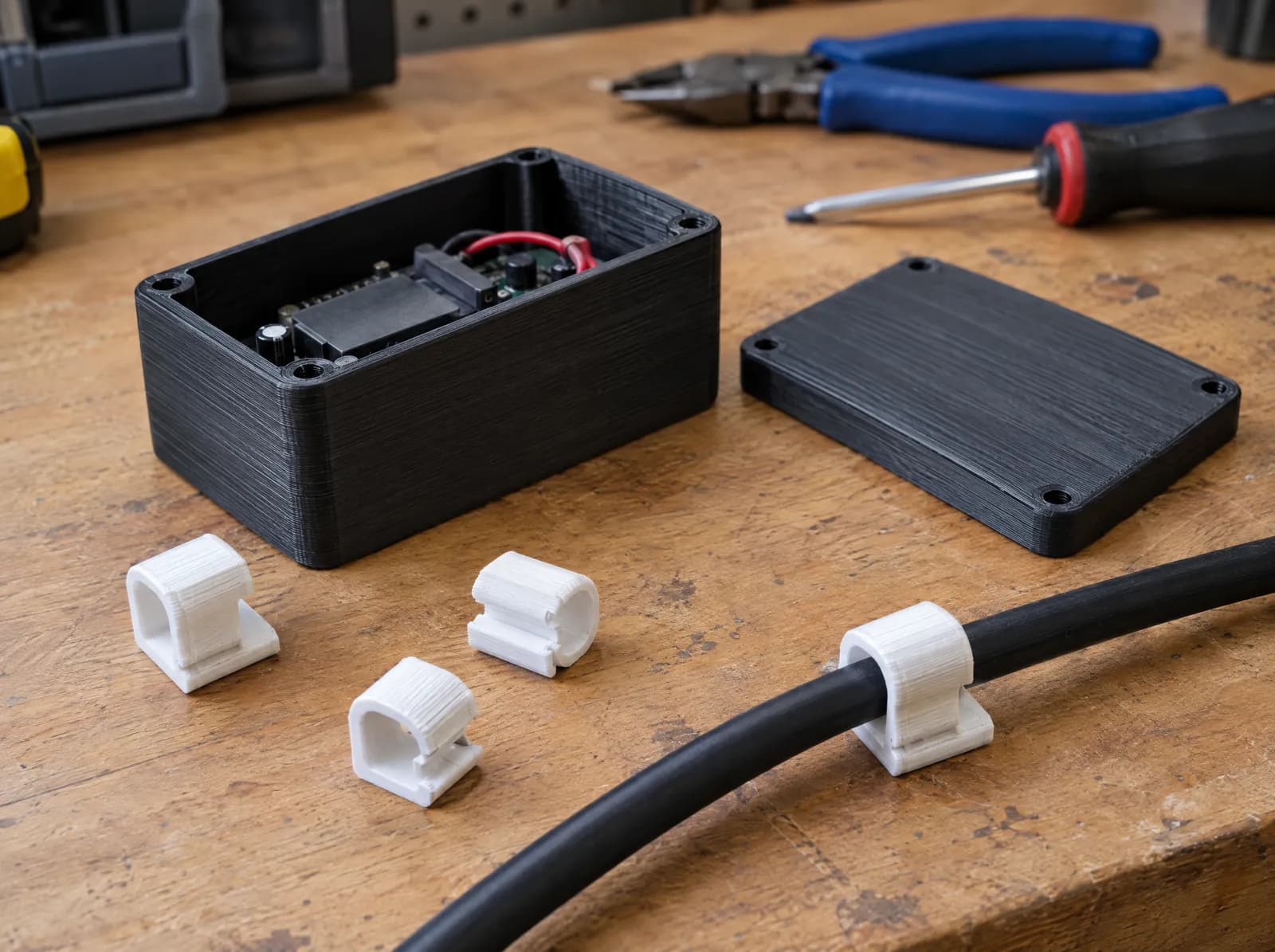
PETG is the right pick for outdoor enclosures, fixtures that get wet, parts that ride in cars, jigs that take impact, and replacement parts for shop equipment. Most production runs we print are PETG.
We print PETG for plant maintenance teams, hardware startups doing field tests, and robotics shops who need rigid mounts.
PETG vs PLA
PETG vs PLA is the most common material question we get. PLA prints cleaner and costs a little less per part. PETG is tougher, handles heat better, and resists chemicals.
Pick PLA for visual prototypes and indoor parts. Pick PETG for anything that has to work. For the PLA story, see PLA.
When to Pick a Different Material
Cost per Unit at 100 and 1,000 Units in PETG
PETG sits in the low end of our pricing. It costs a little more than PLA per kilogram of filament but the per-unit difference shrinks at volume. At one thousand units, PETG and PLA cost about the same per part.
For a real number on your part, upload the file and get your instant quote.
Last reviewed 5 September 2026 by 3D Printer on Demand.
See your price in the next 60 seconds.
Upload your STL. Made in the USA, shipped in days.